

Drought-tolerant perennials for full sun
These perennials bloom reliably in full sun with minimal water. The selection prioritizes hardiness and heat tolerance over delicate ornamental traits. Plants requiring constant watering or afternoon shade are excluded.
Criteria focus on established garden performance. We selected species that handle dry soil without dropping flowers, skipping tender annuals or those needing rich, moist compost. Instead, we chose perennials thriving in lean, well-draining soils.
The goal is reduced maintenance. These plants survive hot, dry summers once established, providing lasting color without wasting water.
12 Plants That Still Bloom in Heat
These 12 drought-tolerant perennials thrive in full sun without constant watering. The list covers specific bloom windows, watering needs, and ideal placement to help you build a resilient garden.
-
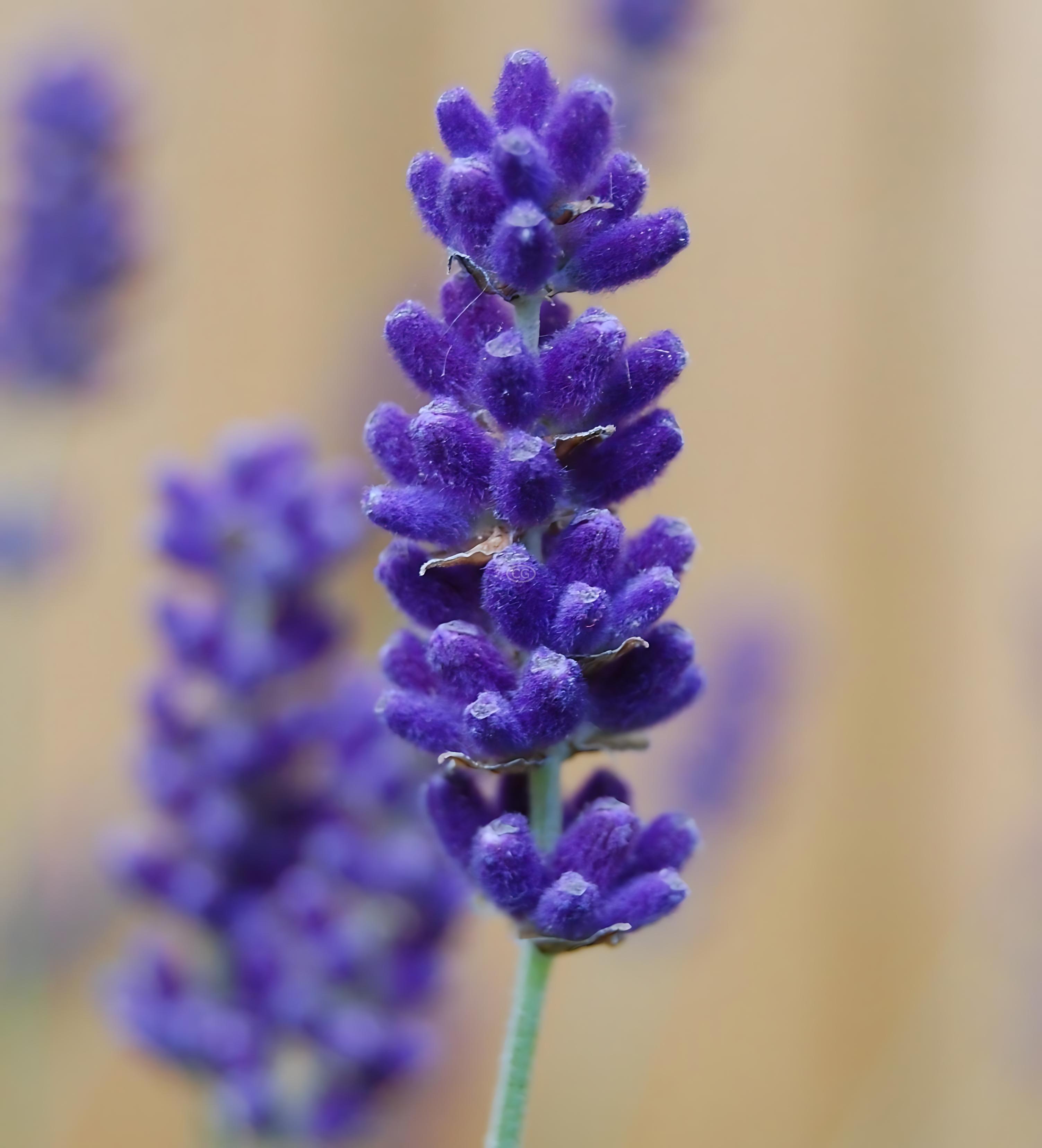
Lavandula angustifolia \u0027Hidcote\u0027 Purple Lavender
Lavender \u0027Hidcote\u0027 thrives in scorching heat with minimal water once established. Its deep purple spikes attract bees and butterflies while repelling deer. Plant in gritty, well-draining soil to prevent root rot. Prune lightly after flowering to maintain shape. This compact variety fits perfectly in rock gardens or along sunny pathways, offering aromatic foliage. -

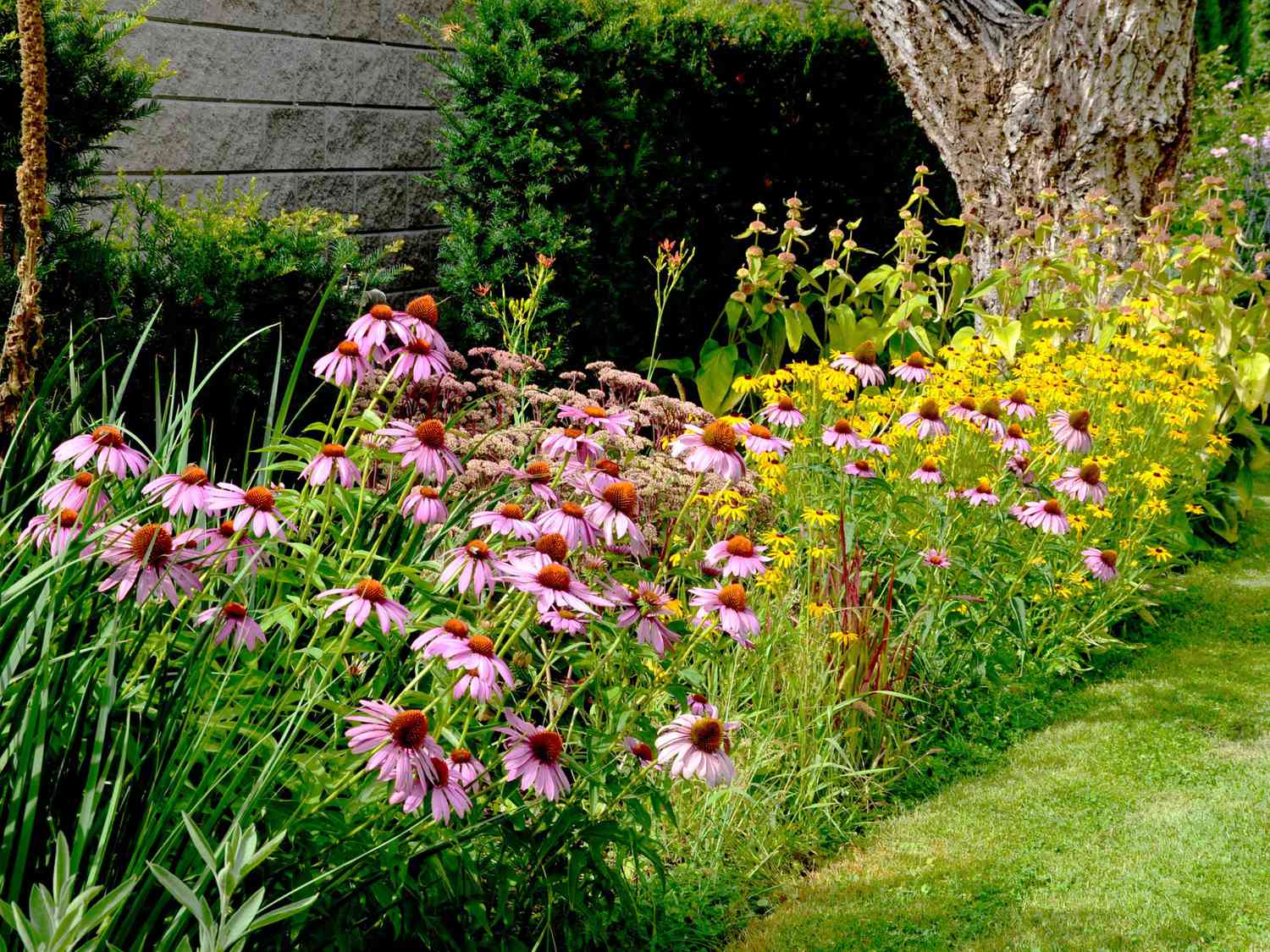
Echinacea purpurea \u0027White Swan\u0027 Coneflower
\u0027White Swan\u0027 offers elegant white petals surrounding a prominent orange cone, blooming from midsummer into fall. This coneflower handles drought well but benefits from occasional deep watering during extreme heatwaves. It attracts pollinators and provides seed heads for birds in winter. Space plants 18 inches apart for good air circulation. -
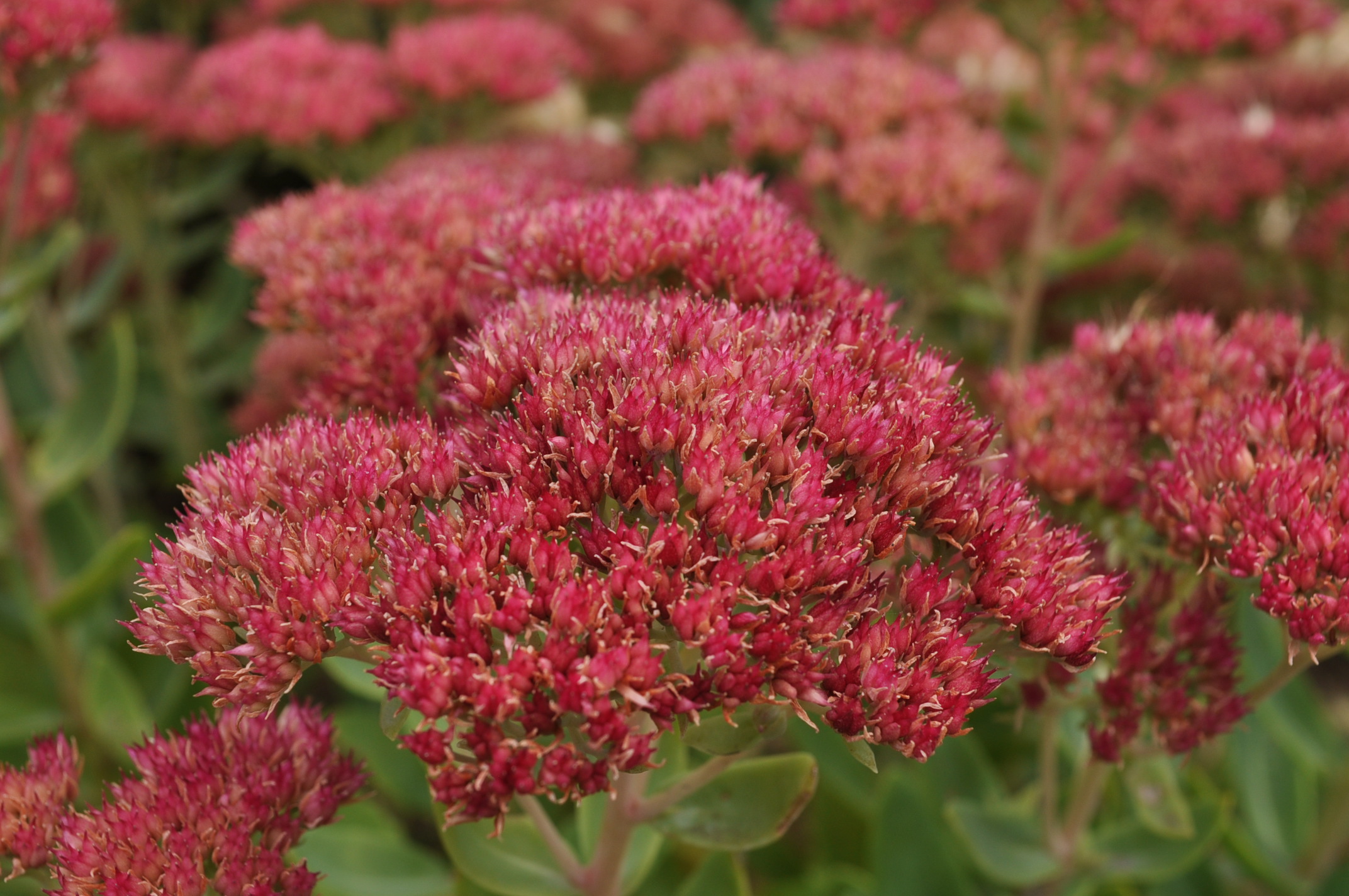
Sedum spectabile \u0027Autumn Joy\u0027 Stonecrop
This succulent perennial stores water in its fleshy leaves, making it incredibly drought-tolerant. Pink flower heads emerge in late summer, turning rusty red as they age. It requires no fertilizer and thrives in poor soil. Plant in spots where water runoff is minimal. The flat flower tops provide landing pads for butterflies. -

Salvia nemorosa \u0027Caradonna\u0027 Woodland Sage
\u0027Caradonna\u0027 produces tall, slender spikes of deep violet-blue flowers that bloom prolifically in full sun. Deadheading encourages a second flush of blooms later in the season. It is highly resistant to pests and diseases. Plant in well-drained soil to prevent winter kill in wet climates. The narrow leaves reduce water needs significantly. -
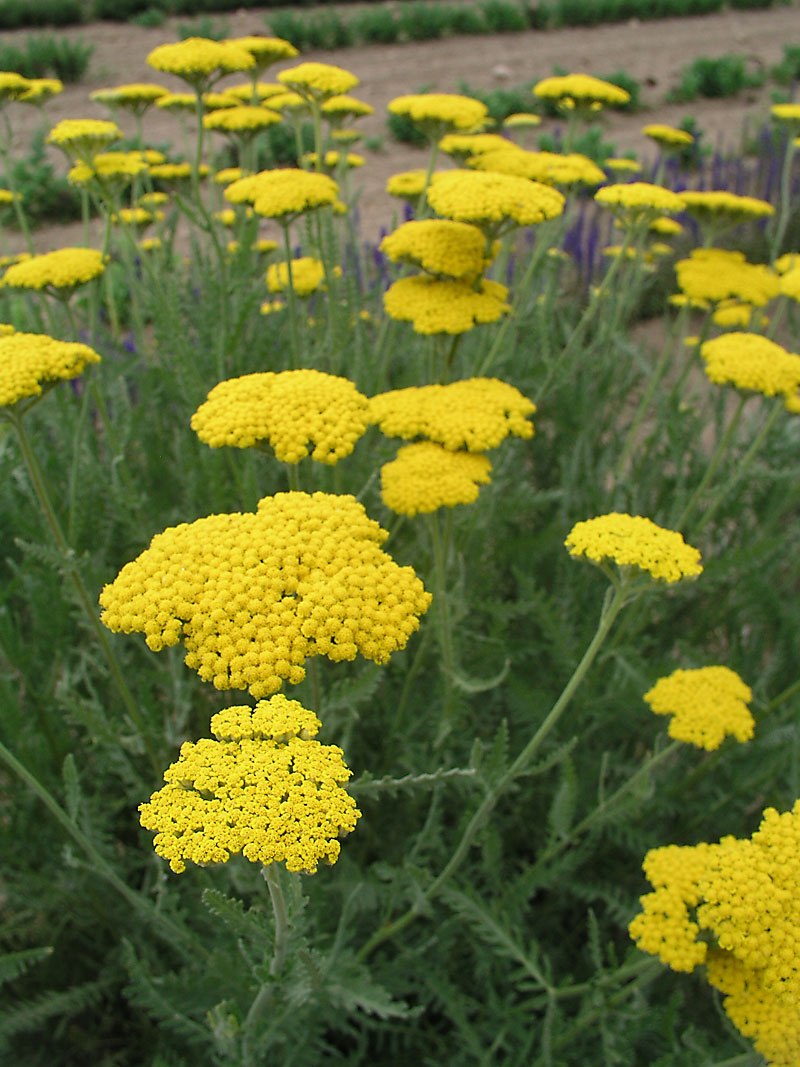
Achillea millefolium \u0027Coronation Gold\u0027 Yarrow
\u0027Coronation Gold\u0027 features flat clusters of pale yellow flowers that bloom over a long season. Its fern-like foliage is aromatic and deters deer. This yarrow is exceptionally tough, tolerating heat, drought, and poor soil with ease. Cut back spent blooms to encourage new growth. It spreads moderately, so give it room to establish. -
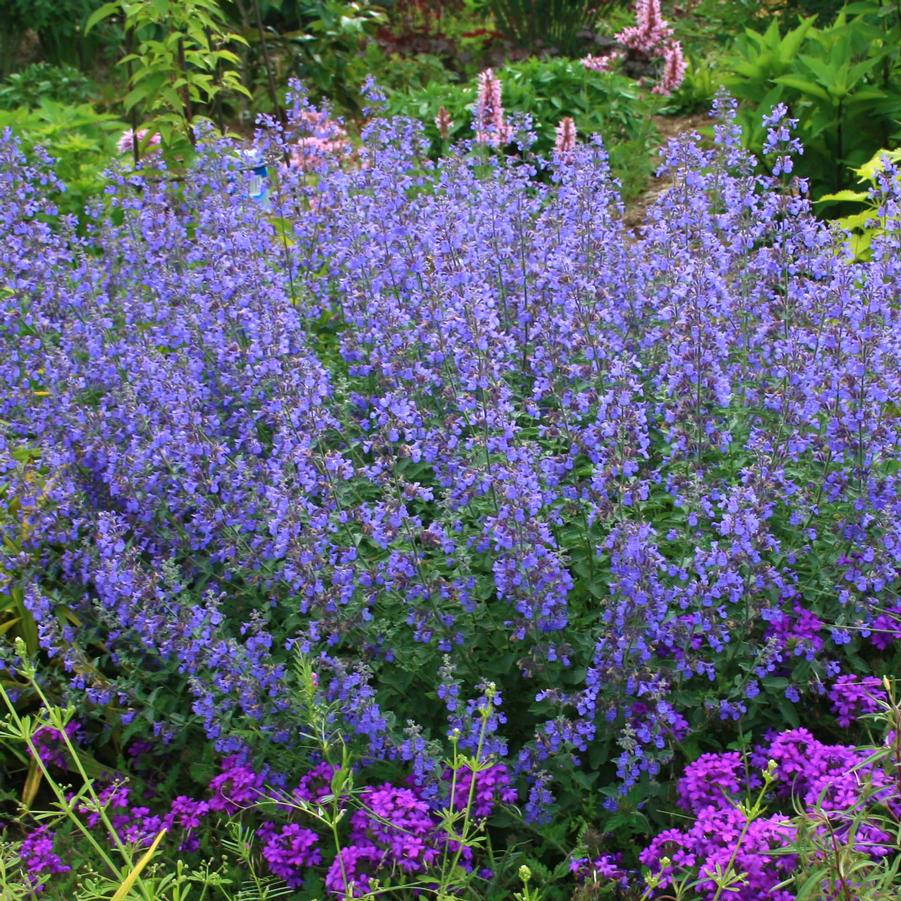
Nepeta faassenii \u0027Walker\u0027s Low\u0027 Catmint
This catmint thrives in baking heat with minimal water once established. Its aromatic, silver-green foliage forms a neat mound topped by spikes of soft violet-blue flowers that attract bees. Deadheading encourages a second bloom wave later in summer. It handles poor soil well and requires no fertilizer. Use it along paths where its scent releases when brushed. -
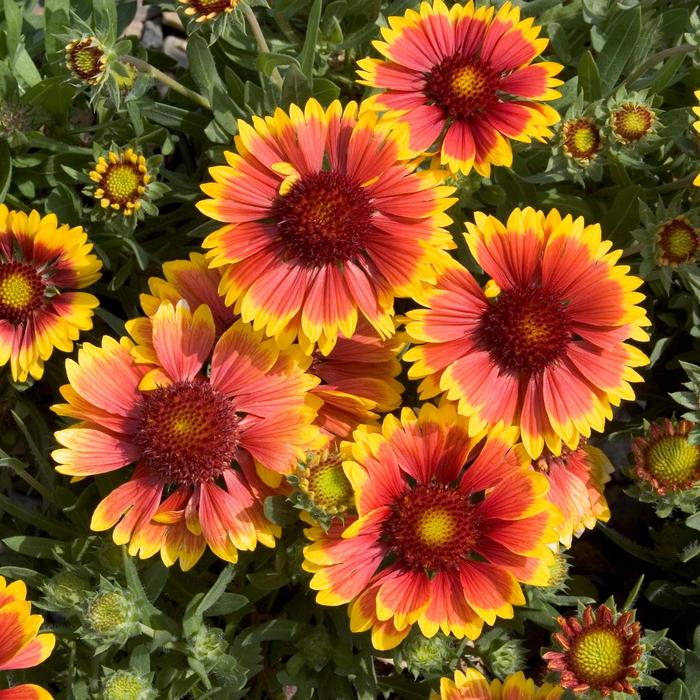
Gaillardia aristata \u0027Goblin\u0027 Blanket Flower
This compact blanket flower offers rich burgundy-red blooms with golden centers that resist fading in intense sun. Unlike taller varieties, \u0027Goblin\u0027 stays tidy at 10 inches, making it ideal for edging or rock gardens. It demands excellent drainage to prevent root rot but otherwise ignores drought. Self-seeding gently expands its presence. -
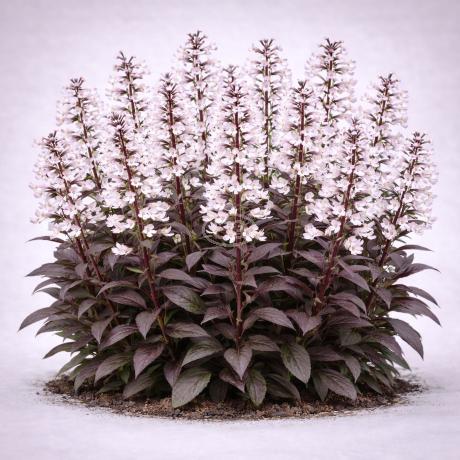
Penstemon digitalis \u0027Husker Red\u0027 Beardtongue
\u0027Husker Red\u0027 delivers striking contrast with deep burgundy foliage and tall spikes of white, tubular flowers. It tolerates dry conditions once established but benefits from occasional deep watering during extreme heat. The plant spreads moderately via rhizomes, forming dense clumps that suppress weeds. Cut back spent blooms to maintain shape. -
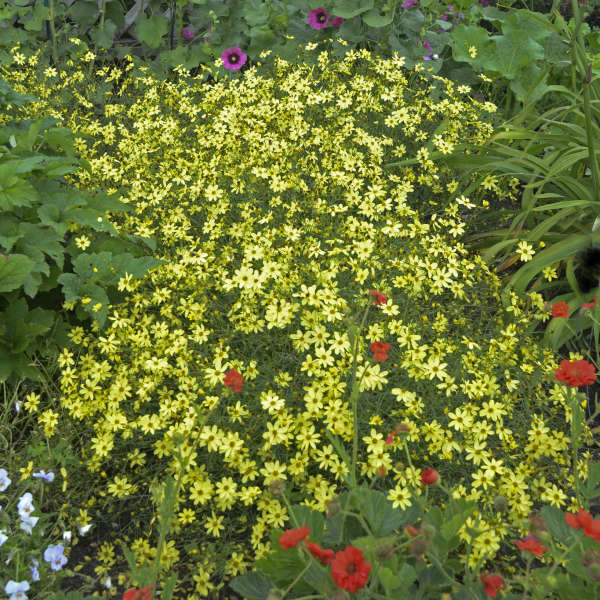
Coreopsis verticillata \u0027Moonbeam\u0027 Threadleaf Coreopsis
This threadleaf coreopsis forms a fine-textured mound of fern-like green foliage topped with clusters of pale yellow flowers. It blooms continuously from late spring to fall, requiring no deadheading. The plant thrives in poor, dry soil and resists mildew better than other coreopsis types. Its delicate appearance softens hard edges in gravel gardens. -

Agapanthus africanus \u0027Lily White\u0027 African Lily
This African lily produces dramatic spherical clusters of white star-shaped flowers atop tall, sturdy stems. It prefers full sun and well-drained soil, tolerating dry spells once established. In colder zones, mulch heavily or grow in containers for winter protection. The strap-like leaves remain evergreen in mild climates. Use it as a focal point in containers or along walls. -
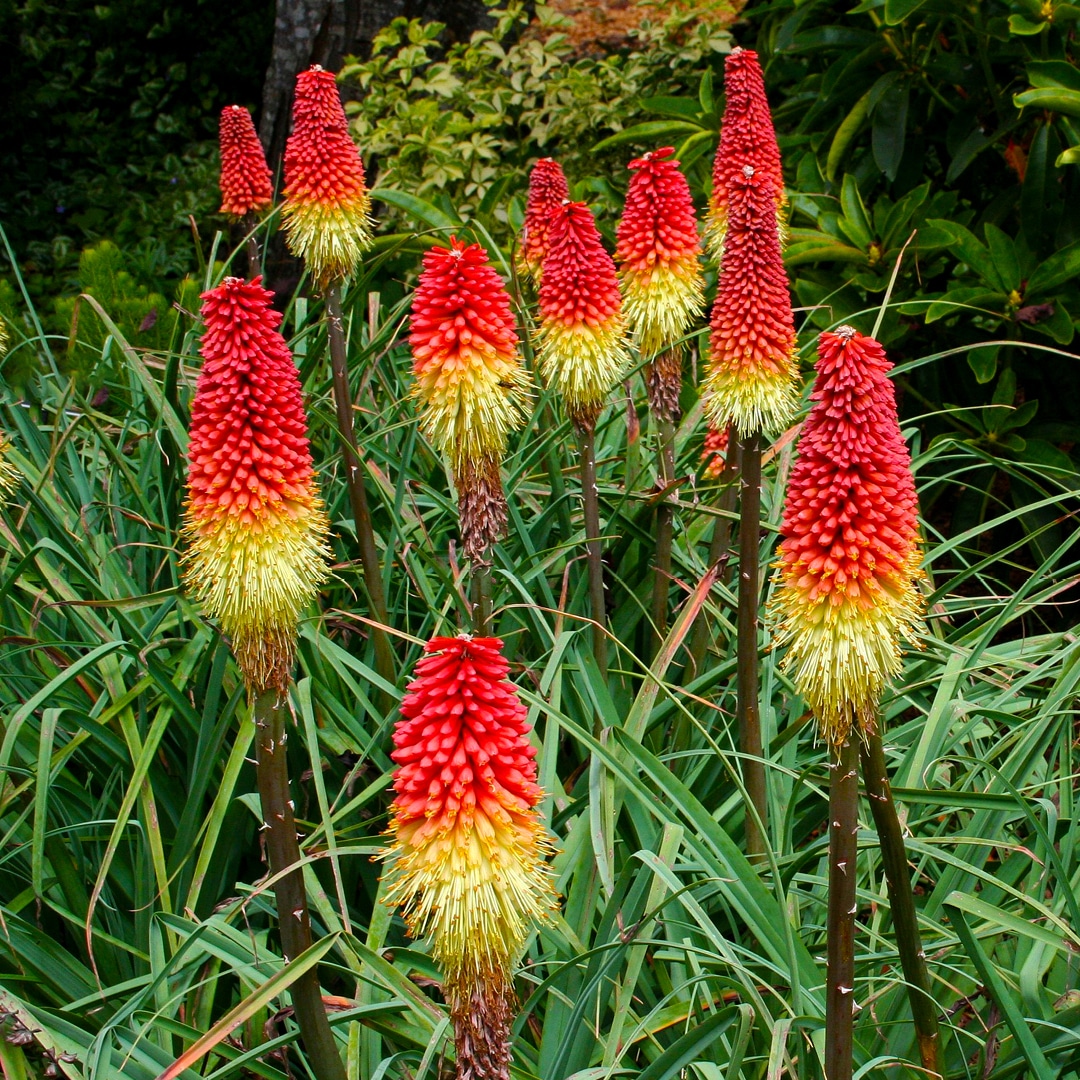
Kniphofia uvaria \u0027Tawny King\u0027 Red Hot Poker
This torch lily delivers striking orange-yellow flower spikes that resemble lit candles against dark green foliage. Thriving in USDA zones 5-9, it demands excellent drainage and tolerates prolonged dry spells once established. The blooms attract hummingbirds and last well as cut flowers. Plant in full sun where its architectural form provides vertical interest. -
:max_bytes(150000):strip_icc()/IMG_4892-31c7404eaf1741c08d736d9b93e0c680.JPG)
Verbena bonariensis Tall Verbena
Tall verbena creates an airy, see-through screen with clusters of tiny purple flowers atop slender, square stems. It thrives in hot, dry conditions and self-seeds readily, though it rarely becomes invasive. The plant’s height makes it ideal for the middle or back of borders, providing structure without blocking views. Minimal water needs and resistance to common pests make it a low-maintenance staple.
Planting considerations
Choosing drought-tolerant perennials for full sun isn't just about finding plants that survive; it's about finding plants that thrive without constant attention. Use this framework to ensure each pick matches your specific garden conditions.
Most drought-tolerant perennials struggle in heavy, waterlogged clay. They need well-draining soil to prevent root rot during rare heavy rains. If your soil is clay-heavy, amend it with compost or choose plants like sedum and yarrow that tolerate poor drainage better than delicate blooms.
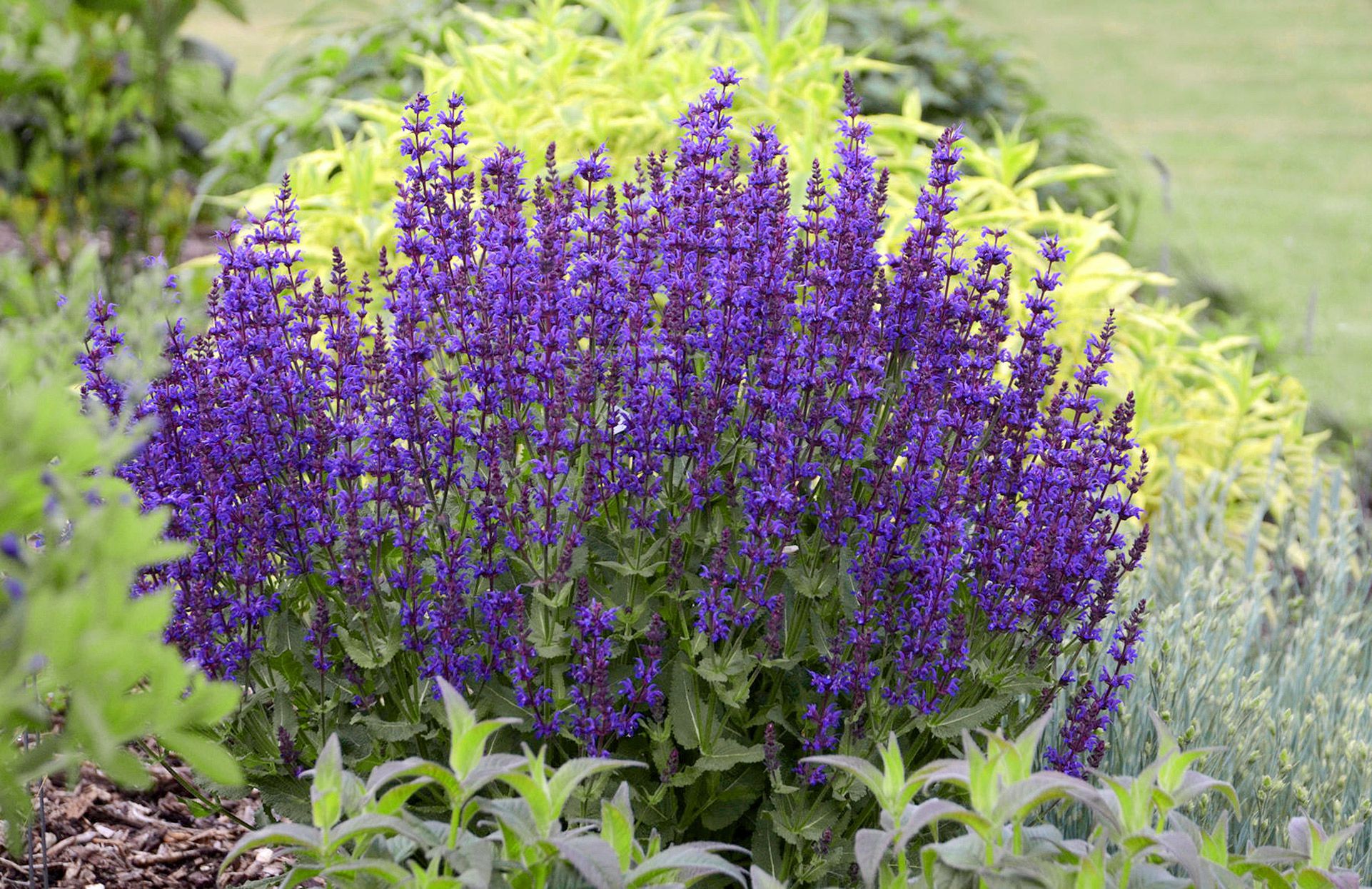
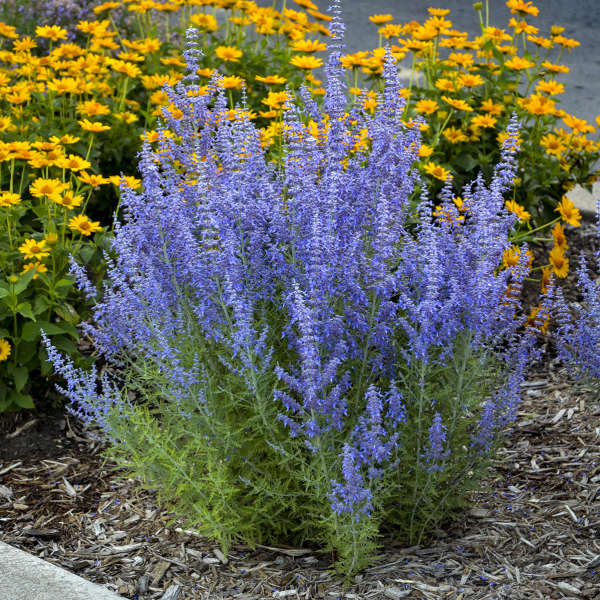
A successful garden offers color throughout the growing season, not just in June. Check the bloom time for each perennial. Pair early bloomers like catmint with mid-summer stars like salvia and late-season performers like Russian sage to keep your borders vibrant from spring to fall.
Drought-tolerant plants often spread aggressively when water is scarce. Check the mature width, not just the height, to avoid overcrowding. Give each plant enough room to establish its root system, which reduces competition for the limited moisture in your soil.

As an Amazon Associate, we may earn from qualifying purchases.
| Plant | Best Soil | Mature Spread | Peak Bloom |
|---|---|---|---|
| Sedum | Sandy/Well-draining | 1-2 ft | Late Summer |
| Salvia | Average/Well-draining | 1-3 ft | Mid-Summer |
| Russian Sage | Sandy/Loamy | 2-3 ft | Mid-Late Summer |
| Yarrow | Poor/Well-draining | 1-2 ft | Early-Mid Summer |
No comments yet. Be the first to share your thoughts!